Showing posts with label documentary. Show all posts

Thursday, August 02, 2007

No End in Sight

In terms of style, the latest feature documentary about the Iraq War to have come out in the theatres, No End in Sight is quite conventional. Just a dozen or so talking-heads mixed with news footage and occasional commentary. Its approach however is a little different from other documentaries about the war (I have seen only one - Iraq in Fragments). It doesn't get into the subject of the life of ordinary Iraqis before or after the war, the sights and sounds on the ground as it were. Neither it is a polemical or ideological attack on the Bush administration and its foreign policy. This is not to say that it is not effective, it is devastating expose alright but the focus is limited entirely to the strategic mistakes the Bush administration did in the first few months after the ouster of Saddam Hussein from Baghdad. Although Ferguson doesn't explicitly state his own position on the justification of the war, it is not hard to guess that like many strategic analysts (he is a fellow of some washington think tank too) he believed the invasion was justified and that his only gripe is with the bungled mismanagement of the aftermath. It is as if the documentary was meant to be shown for the future budding strategists. "Let's learn from our mistakes. We will not repeat them when we attack the next country on the list" -- that's what I thought the film was basically saying. (At one point the narrator even points that the war has left the country short of funds and resources for a possible military "engagement" with Iran which is a greater threat and a more hostile country.)

Even though it lacked any political perspective in terms of just plain facts it was really an educational two hours spent. To be honest I stopped following the news about the war long back. But I think even those who were uptodate with the latest wouldn't have known such facts like for example, the traffic management of Baghdad was handed over to a fresh graduate of the georgetown university! Or the callous way the administration allowed the Iraqi museum to be destroyed and looted. Some of the relics housed by the museum belonged to the oldest human civilization on earth. There are many such small facts which coalesce into a devastating whole, all underscoring the arrogance and hubris of people who planned the whole thing.

It is precisely this attitude of hubris and contempt towards the Iraqis (more than oil grab or lasting military occupation) that establishes parallels with the imperialist projects of the past. I think in principle the idea of humanitarian intervention and universal human rights is a very honourable one but you just need to see a few press conferences of Donald Rumsfeld (the documentary contains clips from plenty of those) to convince yourself that concepts like universal law and political ethics were the last things on their minds when they were planning the whole thing. This is one major flaw of the film. Getting all the details wrong was only a proximate cause of the failure, the ultimate cause was the dishonest intention with which they went into the war at the first place. If they really had cared for human rights and democracy and the will of the Iraqi people all this could have been avoided.

Some reviews here and a trailer:

Friday, May 25, 2007

Zidane: A 21st Century Portrait


I don't follow sports. I don't hate it, I am just indifferent. As a kid I was never good at anything when it came to sports but then I never felt like trying either. In fact one of the most recurring memories of my childhood is of my mother admonishing me almost every evening to "behave like a boy" and "go out and play" (she obviously never read any gender theory) which I ultimately did, but always reluctantly. Now that I have grown up, I have also found some serious reasons to distance myself from sports, specially mass sports, which are nothing but sublimation of the ancient and barbaric instincts of tribalism and war and aggression. Even more reprehensible are other things like crowd hysteria, the shameless emotionalism of fans and supporters, the sheer irrationality of the whole spectacle! It also reminds me of a hilarious sequence in the novel The Man Without Qualities. The novel's hero Ulrich says, he decided to discontinue the project of "the pursuit of greatness" (don't remember the exact words) as his life's goal ever since he came across a newspaper article referring to 'A Racehorse of Genius'.

Anyway, before all the irate fans start hurling abuses on the blog, I will come right down to the subject. I really wanted to see this experimental documentary ever since I heard of it, during last year's Cannes film festival, where it was first shown. The concept itself sounds fantastic. The two video installation artists along with their acclaimed cameraman Darius Khondji (Wong Kar-wai's new cinematographer) set up 17 (very) high definition video cameras to track Zidane over the course of one single game. So for the entire one and half hours it is only Zidane and more Zidane on screen. The images from different perspectives are intercut masterfully. We see his face, his body, his hands, his feet, sometimes with ball but most of the time without it. In fact the whole thing first of all is a real triumph of editing. The sound effects alternate between that of crowd in the stadium, the internal soundscape of Zidane himself--grunting, sometimes mumbling but generally just silent with audible breathing and a evocative melancholy score. Sometimes we get to read Zidane's thoughts about the game and his life as subtitles. This is easily the best part of the film. Rest of the time we just see him from every single angle possible. As the subtitle says it is truly a "portrait" in a very literal sense. If it can be compared as a work of art, which it no doubt definitely is, it can only be compared to those medieval religious iconographies. It specially works in his case because he is gifted with a great personality. His complete opaque face hides everything beneath making it mysterious and interesting to look at. Even when he is with the ball, it feels as if he is doing some duty, as if playing was what he was fated to do, as if he has no choice but to do what he is doing. I am totally sure this concept wouldn't have worked with other football superstars like Beckham or Ronaldo (both of whom incidentally play in this match too.)

In short it is not just a wonderful concept piece but also an enjoyable and riveting work of art. I just wish there was more of Zidane's thoughts and the beautiful music score. It would have been even better then. This is also I think more suited for video installations rather than a full-fledged movie. As a movie it may feel repetitive to some viewers. Needless to say, indispensable for all football fans. Fans of Zidane in particular must have seen it already. For more information, articles from Guardian/Observer and Sight and Sound.

Monday, May 21, 2007

Protocols of Zion

A rather disappointing documentary on an increasingly important topic. It has enough that will alarm even the most indifferent of viewers but ultimately it is just too rambling and scattershot to make any genuine contribution to the debate surrounding the resurgence of anti-semitism (also called New Anti-semitism) in most parts of the world, specially in the middle east, after 9-11. The rumour that the world trade center attacks were orchestrated by Israelis and that no jews died in the attacks is common in the arab world. Even the mainstream media believes and propagates this propaganda in the muslim world. Protocols of the Elders of Zion, a classic conspiracy theory text of anti-semitic propaganda, is a bestseller in Iran. The president himself presides on a conference of lunatics specialising in holocaust-denial.

Most of the footage and interviews shown in the film are truly frightening and to ignore them as works of a lunatic fringe will be a serious mistake. Having said that, the film doesn't really get into really troubled waters, i.e. in what ways the radical left wing critics of American foreign policy and Zionism are contributing to the rise of anti-semitism and how the paranoia of Israel and jewish groups in America isn't helping matters either. There was a major controversy recently when the talk of the reputed historian Tony Judt was cancelled after some backstage heavy handed manipulation by the anti-defamation league. In this age of multiculturalism, nothing could be more anachronistic than the political ideology of Zionism. Nobody with a sense of history will deny its historical justification and the right of Israel to exist but the question is how should we see it now. There is also this bizarre and persistent claim of the ubiquitous and omnipotent nature of the so called "Jewish Lobby" in american foreign policy. Now I am not calling these people anti-semites, this is perhaps just a careless use of language.

What I find personally problematic is the thin line that separates rational criticism of a belief system (poitical or religious or both) and a slander against a people i.e racism. For example when I put one of the Danish cartoons on the blog, was I being a racist or just ridiculing people who believe they are going to get virgins in heaven if they blow themselves up. Similarly when I call Hindus superstitious idiots and idolaters am I criticising the essentially reactionary nature of organized Hinduism or actually slandering the Hindu community or the great tolerant and enlightened Hindu tradition? I personally think I did all this in good faith, based on the simple assumption that all organized religions are founts of hatred and irrationality and religious belief is by its very nature a political act and so there is every reason to link racism and fascism to religion.

The case of the critics of Israel is similar. Most of them are definitely not racists but their careless use of language only gives fodder to the real racists and bigots. Wikipedia has a fantastic article on new antisemitism. I myself don't know much on the subject of Israel-Palestine or even the history of Zionism. In fact only a couple of days back I was reading about Theodor Herzl and the founding of the international Zionist movement in the wonderful book Wittgenstein's Vienna. It is a very fascinating and interesting subject. It sheds a lot of light on contemporary debates about cultural assimilation too. The most straightforward conclusion is also the most pessimistic one, that true cultural assimilation will remain a pipe-dream. I will post about it later.

Saturday, April 28, 2007

Shoah

I have been watching the ten hour documentary Shoah directed by Claude Lanzmann for the last few days. I did complete it today and now I feel like hallucinating. It is a unique documentary in the sense that it doesn't have any real historical footage, no background music, seemingly straightforward editing and camera work. Actually it first gives the impression of being "unprofessional" and simplistic but over time it builds up its effects, mainly through the power of repetition of images. Most of the documentary is filled with first person testimonies of survivors, bystanders, perpetrators and historians (actually there is only one historian or expert on the subject interviewed -- Raul Hilberg, author of the three volume history of Holocaust The Destruction of European Jews.) All of these interviews are intercut with scenes of death camps as they exist today. Camera probing the surfaces to find some evidence, almost staring into a silence, a nothingness. There are shots of bleak, ghostly, desolate and ugly landscapes of polish hinterlands, the site of such enormous suffering not long ago. And yes, there are unending and endlessly repeating shots of trains standing or trundling on the railway tracks. It is like some vile, horrifying music which you want to get away from but can't because it has found a place in the subconscious. And all this time the camera always looking for something but finding only silence and absence.

Lanzmann reportedly shot more than a hundred hours of footage over a decade but actually he uses only a handful of testimonies. They are all amazing interviews, whether it is of the survivors or the perpetrators, some of whom he films secretly. A railroad manager claims he never knew what the trains were for, for which he devised timetables. Another says he didn't know the conditions of life in the Warsaw ghetto where he was one of the deputy managers. Lanzmann patiently asks questions and listens and then again prods and asks counter questions.

I found the polish sequences of the documentary most interesting. Lanzmann is obviously hostile to the polish population who did nothing or at least didn't do enough to save the jews. He interviews many polish gentile witnesses some of whom are now living in the homes previously owned by the Jews. He doesn't always gets the "right" answer though--answers which would implicate the Polish population in a more straightforward manner. Though I have not read much about this but I gather that the subject of the Polish-Jewish relations is an extremely controversial one. How anti-semitic the Polish society was? How responsible the Poles were for what happened? This film doesn't answer these questions even though Lanzmann selects some stupid looking peasants and tries hard to make a case against Poland. An old woman for example says, she is now better off than she was then. "Because the Jews are gone, or because of socialism?" asks Lanzmann. No, because before the war she picked potatoes and now she sells eggs! Another one says that it would be nicer had they gone to Israel on their own. Yet another narrates the story of the crucifixion and blood libel that he claims he heard from a rabbi. There is an old train driver who drove thousands of victims to their death. It was terrible, he says, hearing the cries of children in the compartments in the back but he "got used to it" and then there are always the Germans. In the end Lanzmann withholds his judgment about the Poles. The train driver in the end comes across as a more sympathetic figure (comparatively) than the Nazi railway manager who merely gave orders and approved the plans sitting at his office desk.

Lanzmann sef-consciously eschews asking the big questions -- the whys? and what does it mean? In this he follows what Raul Hilberg says in his interview:

"In all my work I have never begun by asking the big questions, because I was always afraid that I would come up with small answers; and I have preferred to address these things which are minutiae or details in order that I might then be able to put together in a gestalt a picture which, if not an explanation, is at least a description,a more full description, of what transpired."

The focus for the entire film is to recreate the experience, not by artificially recreating the life in the camps or using footage, but through the memory of those who personally underwent the experience. I could understand the motivation of this approach but I still find it troubling. The big questions are also important, we have to ask and find answers to those questions, just that we need to resist the easy consolations of explanations. Shoah is not easy to watch, it demands a lot of time, patience and effort but it is a landmark and important work and deserves all of it. Here's a short write-up with some stills and a trailer of the film here.

Saturday, March 31, 2007

Three Documentaries

Three excellent documentaries I saw recently. All highly recommended.


Touching the Void: Touching the void tells the real life story of Joe Simpson and Simon Yates, two Brits in their early twenties, who go on a mountaineering expedition in the Peruvian Andes. The 6344 metres high Siula Grande mountain has never been climbed before and the two men want to make a name for themselves. After three and half days of continuous climbing they both make it up to the summit but on the way down Joe meets with an accident and fractures his leg. Simon tries to bring his friend down with him initially but after some further mishaps has to take the painful decision of cutting the rope and making his way back down alone. The real story starts from here about how Joe survives against all odds even after having "touched the void", i.e came face-to-face with death. It could easily have become one of those cheesy stories about how inspiration and the will to succeed against all odds leads to success etc but it does not mainly because it is so awesomely shot. The story is narrated entirely through the voices of the (real) Joe and Simpson and their third partner who was in-charge of the base camp. The rest of the film is a dramatic reconstruction of the actual events. And what a reconstruction it is! If you have seen films like Cliffhanger or Vertical Limit and think you have seen enough, wait till you see this one. Also the struggle and ordeal that Simon goes through, virtually crawling his way back to the base of the mountain, it makes one think afresh as to where does this will t0 survive come from? What is this elemental force that keeps him going against such insurmountable odds? Did he have something special psychologically? Must have been. That's why not all of us become mountaineers. Some reviews of the film here.


One Day in September: The Munich Olympics terrorist attack was in news last year because of the controversy surrounding the Steven Spielberg film Munich. Spielberg's film also had a brilliant reconstruction of what happened in Munich but the rest of the film was very naive, simplistic and cliched. This documentary is not really a reconstruction but is made entirely of actually footages from the tragic event. Michael Douglas in his sonorous voice provides the sparse commentary but rest of the time it is the events which speak for themselves directly. There is also a remarkable interview with one of the survivors of the Black September terrorist group responsible for the attacks. He performs the usual role of providing the other side of the story. There are also interviews of the German officials in charge of the negotiation and the rescue operation. Overall the Germans come out very bad in the end for the ineptness they showed. It is shocking to see how ridiculously ill prepared they were. There is also an interview with the wife of one of the murdered member of the Israeli team. It is all fused together so brilliantly that it is difficult to take your eyes off screen for even a second. It is relentless and horrifying and suspenseful, even though one already knows how the whole thing will end in advance. Like Touching the Void, this film was also directed by Kevin McDonald, who obviously looks like a very important filmmaking talent on the strength of just these two films. It also won the Oscar for the best documentary film in 2000. The Wikipedia page of the film here.

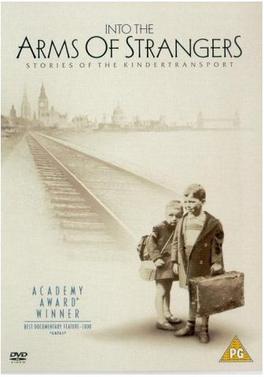
Into the Arms of Stranger: On the eve of the second world war a remarkable rescue operation called Kindertransport saved the lives of over ten thousand Jewish children by taking them away from their homes in Central Europe and Germany to England, where they lived in foster homes and orphanages. A major part of the documentary is about the men and women, now in their sixties and seventies, telling their experiences of leaving home at such an age and landing up in an alien country. Judi Dench provides the necessary narration with her usual crispness. It is remarkable, the clarity and enthusiasm with which all of them tell their painful stories. A few of them were even reunited with their parents after the war but most of them were not so lucky. They knew the terrible truth about what had happened to their parents soon after the war ended. It is also tragic to think how many more lives could have saved. Only children were allowed because the British government thought that they wouldn't be of considerable burden to the national economy! And even then they had to go through lots of bureaucratic hassles. A similar proposal to bring children to US was quashed by the senate because they felt that the children belonged to their parents and they couldn't allow children to come on their own. It won the Oscar for the Best Documentary film too. This is the wikipedia page.

Tuesday, January 23, 2007

The Pervert's Guide to Cinema


The Pervert's Guide to Cinema is a two and half hours documentary on psychoanalysis and cinema presented by the colourful and charismatic Slovenian philosopher and critic Slavoj Zizek. It is actually far more enjoyable than it seems and not only for film buffs, though if you are a Hitchcock or a David Lynch fan then it will help because more than half of the documentary is devoted to a discussion of their films. He also brings in Tarkovsky (Stalker, Solaris), Kieslowski (Blue), Eyes Wide Shut (Kubrick), The Piano Teacher (Michael Haneke), Persona (Bergman), Chaplin and The Matrix at many places to illustrate his arguments and hypotheses. He does give some plot details but I think he assumes that the viewers are familiar with the movies he is lecturing about.

I am not too familiar with Freud or psychoanalysis so I am not sure if I really understood what he is trying to say. I think he is arguing for "constructivism", the idea that reality is not "real" but rather constructed and cinematic fiction helps us understand how this reality is constructed in tune with our desires and psychic needs. He brings in similar theories about desire, sexuality, subjectivity and gender too. Those who are well read in these topics will really enjoy the documentary. Rest will just gape at Zizek and marvel at his personality and way of talking. He is one animated fellow. The way he speaks gives you an impression that his mind is racing fast with all the ideas and associations and his vocal chords are desperately trying to catch up. He garbles words, he moves his hands, leaves sentences incomplete, it is really very funny. (His accent is very funny too. He pronounces "phallus" as "faloos"!).

Another important feature of the documentary is that he himself travels to the actual locations where the movies that he is discussing were shot or to made-up replica sets. So we see him inside Dorothy's apartment from Blue Velvet, Club Silencio of Mulholland Dr, the room with the greenish light from Vertigo, the mother's cellar and the bathroom from Psycho and many other places. He goes to the Bodega bay where the heroine is first attacked by the birds in Hitchcock's the birds. He says while guiding the boat, "You know what I am thinking, I am thinking what Melanie is thinking. I am going to fuck Mitch." (He later says that birds are the maternal superego trying to prevent the sexual intercourse!)

He doesn't shy away from provocative or politically incorrect statements. He is gardening the lawn just like in the opening scene of Blue Velvet and he says pointing to the tulips (which are also in the opening scene):

My Relationship with tulips is inherently Lynchian. I think they are disgusting. Just imagine aren't these some kind of, whaddyacallit, vagina dentata, dental vagina, threatening to swallow you up. I think flowers are something inherently disgusting, what a horrible thing these flowers are! Basically it is an open invitation to all the insects and beasts to come and screw me. I think flowers should be forbidden to children.

And then this theory about sexuality... just before he gets to "the orgy scene" from Bergman's persona.
We men, at least in our phallogocentric mode (mood?) of sexuality, even when we are doing it with the real woman, we are effectively doing it with our fantasy, a woman is reduced to a masturbatory prop, woman arouses in so far as she enters our fantasy frame, with women it is different, the true enjoyment is not in doing it, but in telling about it afterwards, of course women do enjoy sex immediately but I hope I am permitted as a man to propose a daring hypothesis that may be while they are doing it they already incorporate this minimal narrative distance so that they are already observing themselves and narrativizing it.

There was also a very intriguing scene where he connects the silencio scene from Mulholland Dr. with the smile of Cheshire cat, Kubrick's Dr. Strangelove and a similar scene from Fritz Lang's Testament of Dr. Mabuse. Some theory about "autonomous partial objects" and "death drive." It was very interesting.

Overall it is a fantastic documentary. It will help if you are a film buff with special interest in films with psycho-sexual themes (sexual repression, subconscious, fantasy, psychic breakdown etc). It is must see if you are enthusiastic about David Lynch, Hitchcock or Freud or all three.

This looks like a transcript of the film, but it covers only the first half. Still some fantastic photographs. Official website and trailers here. This looks like a good article too. I had earlier linked to a few youtube clips of zizek, which includes a couple from the movie too.

Saturday, December 30, 2006

German Silent Cinema


A great and very informative documentary on German silent cinema. German expressionism is one of my favourite "national cinema." My first introduction to these films was curiously the famous book From Caligari to Hitler by Siegfried Kracauer. It was there in my college library and though I hadn't seen any of the movies I was captivated by the book. Though to be honest I didn't really read it in full, it was a little too dense for me. I got a chance to see some of these films a couple of years later at a "film festival" organized by the Goethe Institute in Bangalore. So in the course of one week I managed to see The Cabinet of Dr. Caligari, Nosferatu, Faust, Golem and Metropolis. Every one of them was something I had never seen before. They are still startling. All highly recommended. Later I managed to see Murnau's The Last Laugh and Josef von Sternberg's The Blue Angel which are not really expressionist films but had elements of expressionism. Fritz Lang's M was another masterpiece. I really love all these films. Haven't seen anything by Pabst or Lubitsch yet. They are still in the to-see list.

The video is actually a part of a series on the history of European Cinema. You can watch the first episode here. Rest are on the right sidebar.

Murnau's Nosferatu is also on the google video.

A good primer on German Expressionism.

Wow! Fritz Lang's M and Scarlet Street are also there!

Tuesday, July 25, 2006

The Corporation

Just finished watching the brilliant Canadian documentary The Corporation. It is brilliant, sharp, funny, entertaining and ultimately grim examination of what the film calls, "the most dominant institution of our times." And for someone like me, who has never looked up inside any law book in my whole life, it was also very educational and enlightening. For example, I didn't know that in the legal parlance the corporation is viewed just as a normal person with the same rights as any other real person would have. But since it is only a legal abstraction it has no moral responsibilities and is not bound by any moral law. It is this insight that the filmmakers use to compare it to a typical psychopath and find that it indeed displays all the symptoms of a psychopath.

The film is full of facts and is exhaustively researched. It goes into the history of the origins of private ownership and property rights and the origins of the concept of "limited liability." The film has an interesting historical anecdote to tell about the origins of corporate law. There was something called the 14th amendment of the US constitution which was meant to protect the rights of the black slaves who were freed but instead it was used by the clever corporate lawyers to ask protection for corporations. It all sounds slightly bizarre and kafkaesque but thats what it is.

Anyway, the movie then goes on to compile a laundry list of corporate abuses, all done in an extremely entertaining fashion, using vintage advertising, instructional videos and lots of talking heads. Most notably Noam Chomsky (of course) and Milton Friedman, who rubbishes (rightly I think) the idea of corporate social responsibility by saying, "can a building have a social responsibility?" and then says that any kind of social responsibility is against the very idea of why corporation came into existence in the first place, that is to make as much profit as possible for the shareholders. There are also academics and heads of industry giving their views. Most interesting was the CEO of Shell who recounts his experience with a small group of protesters who came to his house with banners proclaiming him a "murderer." He and his wife greet the protesters with a cup of tea and then he says that he is interested in the same things as they are as a person but as a CEO he feels helpless. There is also the head of a company which is the world's largest carpet maker telling how he turned green.

The main point that the filmmakers make is that it is not the persons running the corporation who do the evil deeds but it is rather in the DNA of the corporation itself. It is like a fascist bureaucracy, even a person with a normal moral impulse will feel helpless before the logic of profit making. Of course the classical economics says that the pursuit of profit ultimately results in overall social good, the invisible hand of Adam Smith being responsible for it. But it is applicable only under strict and theoretical assumptions involving well defined property rights. It basically means privatize river, sky, ocean, forests, basically assign ownership to everything and then the "externalities" will disappear automatically. What is interesting is the way corporations relentlessly find ways to "externalise" their costs in newer and newer ways, opening sweatshops in third world companies for example; by employing children and giving them starvation wages. And if you protest you will get a lecture on free trade and "comparative advantage" or by claiming that "it could be worse." -- people would die of starvation if Nike wouldn't have opened its sweatshops there!

Personally the most disturbing part of the documentary was where an advertising executive explains the research that her firm did on what she called "the nag factor" of children. These guys went on to hire professional psychologists and behavioral experts to find better ways to manipulate children's minds so that they could nag their parents into buying their products in a much more effective manner. Also the way it explains how the tyranny of consumerist culture forces us to equate our self-worth to the number of artificially created wants that can be satisfied is just brilliant.

There is lots more in the documentary, about water privatization, seed patenting, media muzzling, military-industrial complex, callous stock-brokers and war profiteers and much much more. It is a fantastic summary of lots of very important debates happening all across the world. In short it is just imperative viewing for everybody.

Some links: Official site here. This looks like a good website about how to protect children from advertising. An article on the film from The Economist magazine here. Finally, the wikipedia entry on Corporation and lots of reading stuff on this organization's website.