Showing posts with label russia. Show all posts

Thursday, July 24, 2008

Greatest Russians?

LA Times has an editorial about a Russian popularity poll which is trying to decide the greatest Russian of all time. It is also lamenting the fact that two leading contenders for the prize right now are Stalin and Czar Nicholas II...

The site for the poll is in Russian but for those who don't know Russian it will be interesting to find out the names just from the picture..

I could figure out only the following (in order):

Alexander Blok
Mikhail Bulgakov
Yuri Gagarin
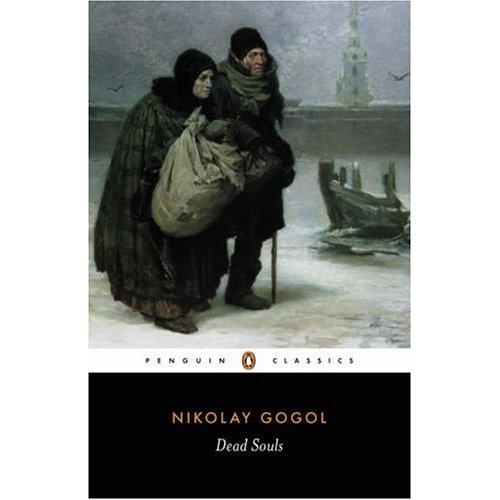
Nikolai Gogol
Fyodor Dostoevsky
Catherine the Great
Boris Yeltsin
Ivan the Terrible
Lenin
Mikhail Lermontov
Czar Nicholas II
Peter the Great
Alexander Pushkin
Stalin
Leo Tolstoy
Ivan Turgenev
Nikita Khrushchev
Anton Chekhov

I guess I shouldn't be calling myself a Russophile anymore!

Anyway I was looking for Trotsky or Gorbachev but can't find them anywhere! Also Nabokov is certainly not there.

Wednesday, November 01, 2006

The Coast of Utopia


I have raved about Isaiah Berlin's Russian Thinkers before on this blog (astonishing, thrilling and a thousand other superlatives!) Not surprisingly given how dramatic and lively this rather dense and theoretical book is, it inspired well known British playwright Tom Stoppard to write a trilogy of plays titled The Coast of Utopia, based on the life and works of major figures of nineteenth century Russian intellectual history, specially Herzen, Turgenev, Belinsky and Bakunin. The wiki page of the play links to individual articles about these writers and thinkers.

The play is getting the American premiere at the Lincoln Center Theater starting from this month which will continue to the next year. I haven't yet got the tickets and I don't know if it will be a good idea because I haven't read Stoppard's play and I feel that even reading Berlin's book just once is certainly not enough for sufficient background, at least as far as I am concerned. It is tough on the pocket too. A single screening (of a single part) will cost around $80 or upwards. Surprisingly all the marathon screenings, all three plays back to back for 12 hours, are already sold out! Never underestimate the literati of New York!

More details on the official site of the play. This will give a good idea of the scale of the production in terms of numbers. 66 scenes, 44 actors, four different languages!

All links via complete review which also links to this great article about Herzen in the latest New Yorker and the lincoln center theatre review page about the play itself.

The complete review page of the play itself contains so many links that I think you can confidently apply for a degree in Slavic Studies after you have read all of them!

Monday, October 02, 2006

Oblomov and A Journey in Bed

This is the funniest thing I have read in a long while. An absolute must-read. It's an "essay" on the nineteenth century Russian novel Oblomov, which is a satire about laziness. I recently read a longish excerpt from the novel in a Russian literature anthology and have been meaning to read it ever since. Now I have to absolutely go get it. Lately, I have been feeling more and more like Oblomov too, oppressed by a profound and spiritual kind of laziness. Will it help me understand what is going on?

This is the wiki entry of the book by the way. The wiki article has this horrifying (to me:)) quote by Lenin:

Russia has made three revolutions, and still the Oblomovs have remained ... and he must be washed, cleaned, pulled about, and flogged for a long time before any kind of sense will emerge.

Saturday, September 09, 2006

Ivan Turgenev: A Fire at Sea

One of the many hilarious parts (in an otherwise extremely dark novel) Dostoevsky's The Possessed is the satirical caricature of the character Karmazinov. Dostoevsky portrays him as a self-obsessed and pompous narcissist, given to naive and affected poetry and delusions of grandeur. Here's one example where the narrator discusses an article of his:

A year before, I had read an article of his in a review, written with an immense affectation of naive poetry, and psychology too. He described the wreck of some steamer on the English coast, of which he had been the witness, and how he had seen the drowning people saved, and the dead bodies brought ashore. All this rather long and verbose article was written solely with the object of self-display. One seemed to read between the lines: “Concentrate yourselves on me. Behold what I was like at those moments. What are the sea, the storm, the rocks, the splinters of wrecked ships to you? I have described all that sufficiently to you with my mighty pen. Why look at that drowned woman with the dead child in her dead arms? Look rather at me, see how I was unable to bear that sight and turned away from it. Here I stood with my back to it; here I was horrified and could not bring myself to look; I blinked my eyes—isn't that interesting?”

It is well known that Dostoevsky based this character on the real life model of Turgenev, with whom he had difficult relations. He also based the above description on a real life incident that happened to Turgenev. It happened when he was nineteen and going to the university of Berlin to continue his studies in philosophy. On the way the steamer caught fire and was completely destroyed. Most of the passengers escaped unhurt, among them Turgenev. But his behavior became a cause of lot of rumour mongering. Isaiah Berlin, in the introduction to the piece that Turgenev wrote about the incident when he was on his Death-bed, writes:
According to the stories that circulated in Moscow and St. Petersburg he had completely lost his head, loudly lamented his approaching end, tried to push his way into the lifeboat, brutally shoving aside women and children, and finally, in full sight of the entire company, seized a sailor by the arm and offered him ten thousand roubles in his mother's name if he would save him, saying that he was the only son of a rich widow and could not bear to die so young.

Berlin then describes how writers, journalists and the general Russian literati of the time contributed in keeping the rumour alive by embellishing their versions with more and more details as the fame of Turgenev grew higher and higher. At last when Turgenev was dying he tried to settle the account by giving his version of the events. The short article is quite good, very typical of Turgenev writing, naturalistic and observational, with fits of lyricism at regular intervals. He does mention the offering of roubles episode but in a very self-deprecatingly humorous way. Berlin writes:
At last the memory of a moment's weakness that must (if my hypothesis is correct) have preyed on him for more than forty years was exorcised, turned into literature, rendered innocuous and even delightful. He represents his own conduct as that of an innocent, confused, romantically inclined young man, niether a hero nor a coward, slightly cynical, slightly absurd, but above all amiable, sympathetic and human.

I have started to like Turgenev a lot. Specially after reading First Love, The Torrents of Spring and parts of Hunter's Sketches recently. Also about his life and the unhappy love affair that he was involved in. I had read Fathers and Sons long back and was disappointed to find the overheated style of Crime and Punishment missing in it... I thought all Russian novels were like Crime and Punishment! I want to read it again now.

Monday, September 04, 2006

On Russian Literature

I have been reading this remarkable and useful anthology of writings excerpted from the Nineteenth Century Russian Literature. The short introduction to the volume is very nice too. The editor in the introduction makes this interesting point:

Literature in Russia played a far broader role than in other societies. While Winston Churchill's History of the English-Speaking Peoples does not even list Shakespeare in its index, it would be unimaginable for a history of the Russian people not to give lion's share of attention to the country's great writers. They were an artistic, spiritual, and social force. Russian readers (and censors and opponents) looked to the great novelists, poets and playwrights for plots, characters and ideas expressive of the chief issues of their age.
And this is exactly what I love about the Russian literature. They are so deeply rooted in a specific time and place, and yet they paradoxically remain timeless and manage to address universal concerns and questions.

Of course Nabokov would scoff at this idea -- reading books of fiction to learn about culture, history or philosophy! He says, in his essay on Dead Souls, that only a fool would want to read the novel to learn about Russian countryside or life in nineteenth century provincial Russia. (I remember being very impressed with the chracter portraits (or caricatures) and the way Gogol captured life and the landscapes in the countryside and the provinces. It is one of my favourite novels ever. It is certainly one of the funniest books I have ever read.) Similarly Nabokov says that only a lazy and a philistine reader would read Gogol's story The Overcoat as a denunciation of the horrors of Russian bureaucracy.

But neither the person who wants a good laugh, nor the person who craves for books "that make one think" will understand what The Overcoat is really about. Give me the creative reader; this is the tale for him.

To Nabokov literature is all about experimenting with the langauge, inventing new ways of saying things, playing with words, metaphors and images. And this is what he expects from a "creative reader" of Gogol. Needless to say, it is a very narrow view of what literature is about, although certainly a valid one in its own right. I find this formalistic or narrowly aestheticised readings very boring. I am happy to be a philistine. Thank you, Mr. Nabokov. I will continue to read novels to learn about history, culture and philosophy! There is also a funny essay on Philistines and Philistinism in the Nabokov volume. Will write about it later.

Saturday, September 02, 2006

From Nabokov's Lectures on Russian Literature

From Nabokov's Lectures on Russian Literature...

On "The Good Reader":

[...]It is he--the good, the excellent reader--who has saved the artist again and again from being destroyed by emperors, dictators, priests, puritans, philistines, political moralists, policemen, postmasters, and prigs. Let me define this admirable reader. He does not belong to any specific nation or class. No director of conscience and no book club can manage his soul. His approach to a work of fiction is not governed by those juvenile emotions that make the mediocre reader identify himself with this or that character and "skip descriptions." The good, the admirable reader identifies himself not with the boy or the girl in the book, but with the mind that conceived and composed the book. [...]The admirable reader is not concerned with general ideas: he is interested in the particular vision

On Russian Literature under communism:
It is difficult to refrain from the relief of irony, from the luxury of contempt, when surveying the mess that meek hands, obedient tentacles guided by the bloated octopus of the state, have managed to make out of that fiery, fanciful free thing--literature. Even more: I have learned to treasure my disgust, because I know that by feeling so strongly about it I am saving what I can of the spirit of Russian literature. Next to the right to create, the right to criticise is the richest gift that liberty of thought and speech can offer. Living as you do in freedom, in that spirital open where you were born and bred, you may be apt to regard stories of prison life coming from remote lands as exagerrated accounts spread by panting fugitives. That a country exists where for almost a quarter of century literature has been limited to illustrating the advertisements of a firm of slave-traders is hardly credible to people for whom writing and reading books is synonymous with having and voicing individual opinions. But if you do not believe in the existence of such conditions, you may at least imagine them, and once you have imagined them you will realize with new purity and pride the value of real books written by free men for free men to read.

On Gogol's Dead Souls:

I repeat however for the benefit of those who like books to provide them with "real people" and "real crime" and a "message" (that horror of horrors borrowed from the jargon of quack reformers) that Dead Souls will get them nowhere.

On Gogol's The Overcoat
The Russian who thinks Turgenev was a great writer, and bases his notion of Pushkin upon Chaykovski's [Tchaikovsky] vile libretti, will merely paddle into the gentlest wavelets of Gogol's mysterious sea and limit his reaction to an enjoyment of what he takes to be whimsical humour and colourful quips. But the diver, the seeker for black pearls, the man who prefers the monsters of the deep to the sunshades on the beach, will find in The Overcoat shadows linking our state of existence to those other states and modes which we dimly apprehend in our rare moments of irrational perception.

***

At this superhigh level of art, literature is of course not concerned with pitying the underdog or cursing the upperdog. It appeals to that secret depth of the human soul where the shadows of other worlds pass like the shadows of nameless and soundless ships.

Friday, September 01, 2006

"The Ungodly Ties"

This is from the back of Tolstoy's Kreutzer Sonata:

While "The Kreutzer Sonata" caused a public sensation, Tolstoy's wife, Sonya, was hurt and furious that he should have enriched his scathing indictment of marriage with private details from their own life together. Tolstoy, during two years of obsessive unhappiness, had become convinced that the idea of a "Christian marriage" was an impossibility. Here he lets loose all his frustration and disgust at human sexuality, and the humiliating, ungodly, sensual tie that binds men to women. The curious result, part self-lacerating, confession, part Christian polemic, is moving, above all, as the story of a man whose sexual jealousy, inflamed by guilt, drives him to murder his wife.

Wednesday, August 30, 2006

What I am reading...

One thing I like about this new place is that there is a nice public library very near to where I live. It is a very small library, which is actually good because unlike those public libraries in Chicago or New York it doesn't feel like a Museum. I feel sad I didn't use the Chicago library as much as I should have had (actually, I hardly went there), I hardly read anything last year but this time I am trying not to waste too much time. Although so far I have been using the DVD section more than the books!

So what am I reading...

I have finished reading Stanislaw Lem's science fiction novel Solaris. It is quite good though slightly disappointing or rather it was just very different from what I had expected it to be. I have seen the Tarkovsky and the Soderbergh versions of the novel and I like them both very much but the novel is very different from both those movies, in terms of tone and emphasis on ideas. I will write about it in detail later.

I was pleasantly surprised to see the Russian literature/culture/history section of the library. Apart from the regular penguin classics of Dostoevsky, Gogol, Pushkin, Chekhov, Tolstoy, Turgenev, Lermonotov etc there are massive tomes of biographies (including a five volume Dostoevsky biography), essays and literary criticism. In the history section there are at least half a dozen books on the Bolshevik revolution and massive biographies of Lenin, Trotsky, Stalin and others. Russia is one country that really has always fascinated me and now that all those books are so easily available I do plan to spend my weekends loitering around that section of the library. Will try to write about them on the blog too. It definitely forces you to read more carefully than you otherwise would care to.

This is my current reading list...

The Complete Short Novels by Anton Chekhov
Collected Stories by Anton Chekhov
Sketches from a Hunter's Album by Ivan Turgenev
Eugene Onegin by Pushkin
Russian Thinkers by Isaiah Berlin
Lectures on Russian Literature by Vladimir Nabokov
The Kreutzer Sonata, Hadji Murad, The Stolen Coupon and other short works of Leo Tolstoy
Dostoevsky: The Miraculous Years (fourth volume of the biography) by Joseph Frank
A People's Tragedy: A History of the Russian Revolution by Orlando Figes
The Charterhouse of Parma by Stendhal (this is not Russian but I am going to read it too)

Monday, August 21, 2006

A Russian Poem

A poem by nineteenth century Russian poet Fyodor Tyutchev translated by Vladimir Nabokov...

SILENTIUM!*

Speak not, lie hidden, and conceal
the way you dream, the things you feel.
Deep in our spirits let them rise
akin to stars in the crystal skies
that set before the night is blurred:
delight in them and speak no word.

How can a heart expression find?
How should another know your mind?
Will he discern what quickens you?
A thought once uttered is untrue.
Dimmed is the fountainhead when stirred:
drink at the source and speak no word.

Live in your inner self alone
within your soul a world has grown,
the magic of veiled thoughts that might
be blinded by the outer light,
drowned in the noise of the day, unheard ...
take in their song and speak no word.
(1830)

*silentium is a place where silence is enforced.

Sunday, August 20, 2006

First Love by Turgenev

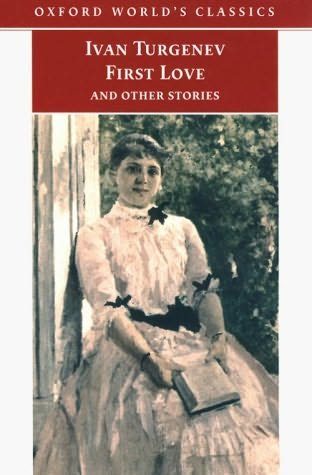
First Love is a novella written by the Russian novelist Ivan Turgenev. I had read his Fathers and Sons a few years back. It was a great love story too though it is more famous for the first coinage of the word "nihilist" in literature. First Love is also quite good, very well written though a tad conventional at times. Sixteen year old Vladimir falls in love at first sight with a pretty girl five years senior to him who has just moved to his neighbourhood with her mother. The pretty girl already has a few suitors competing for her attention and young Vladimir soon finds himself plunging into the painful world of unrequited passion and desire. The novella is actually an account of how he goes through all the familiar emotions of passionate love--attraction, devotion, jealousy, anger, despair, renunciation and then back to devotion and so on in a circle. But he does get out of the vicious circle unlike Goethe's Werther, of whom I was reminded more than once when I was reading it. The story is actually narrated by him to his friends some thirty years later who are sharing their experiences of first love. The other two didn't have anything remarkable to share! There was one thing amused me slightly. I learned that the accursed line, "let's be just good friends", which has broken so many adolescent hearts was popular with nineteenth century Russian girls too! Haha!!

Anyway, it is written in a beautiful prose and is quite small (just over fifty pages) and a great account of the agonies and the ecstasies, the miseries and the splendours of sexual infatuation. All these things have been turned into a cliche in this postmodern and artificial world but reading a great writer still makes you hopeful about the existence of real and honest feelings, which are not mediated by the shallowness and vulgarities of our commercial age. I am thinking of the numerous romantic novels and movies which explore similar territories. Anyway, do check it out if you can!

One sample paragaph from the book. The romantic hero is just out on his horse in the beginning of the story and trying to understand his feelings...

I had a horse to ride; I used to saddle it myself and set off alone for long rides, break into a rapid gallop and fancy myself a knight at a tournament. How gaily the wind whistled in my ears! or turning my face towards the sky, I would absorb its shining radiance and blue into my soul, that opened wide to welcome it.

I remember that at that time the image of woman, the vision of love, scarcely ever arose in definite shape in my brain; but in all I thought, in all I felt, lay hidden a half-conscious, shamefaced presentiment of something new, unutterably sweet--in a word, something feminine....

This presentiment, this expectation, permeated my whole being; I breathed in it, it coursed through my veins with every drop of blood ... and very soon it was destined to come true.

Tarkovsky on Big Screen

The Walter Reader theatre at the Lincoln Center is showing a retrospective of Russian "Fantastik Cinema", a collection of fantasy movies ranging from the silent period to the recent years. I was there on Friday evening for a screening of Solaris. It was quite good though I thought I should have gone for Stalker instead which played last week but I came to know about it only a few days back. Stalker has much more visual splendour than Solaris though it is not as affecting. It is also remarkable that Tarkovsky didn't think very highly of Solaris. He felt the science fiction element was too restrictive and you can almost see his disinterest when the characters talk of "neutrino structures" and "magnetic field" in an extremely casual and careless way. Stalker was more of a "Tarkovskian" sci-fi film--openly symbolic and with very little interest in the real science or any scientific "explanations". Tarkovsky, of course, to put it mildly, didn't think very highly of the whole scientific enterprise which I think was based on a misunderstanding of what the aims of scientific investigation are. By trying to understanding the nature of human experience through science we are merely trying to understand its objective and "universal" aspects. By doing this we don't in any way devalue the personal and unique nature of individual's own experience. And this is where art comes in and complements science. And I think Solaris beautifully illustrates this.

There were other movies in the selection too, none of which I had heard of before, except perhaps The Night Watch which opened theatrically a few months back. Anyway, it was a good experience. Watching a movie on DVD never does full justice to any film.

The Walter Reade theatre is also showing Sholay. It will run through the entire first week of September. So if you want to update yourself on some of its mythologies, be there! Link to the schedule

Friday, July 14, 2006

Some Extracts from A Hero of Our Time by Lermontov

A Hero of Our Time is a nineteenth century Russian romantic novel most famous for its portrayal of the Byronic hero (anti-hero?) Pechorin. It is a brilliant psychological analysis of the romantic imagination and offers a subtle moral critique of the romantic movement. I have collected some extracts from the novel which I really liked. These are from a translation I found on the internet (full text here) which looks to me slighty inferior (that is, more literal) than the Penguin Classics version which I had. Wikipedia has more information about the novel.

So here are some of Pechorin's thoughts on Boredom, Love, Women, Unhappiness, Life, Death and other things...

***
I have an unfortunate character. Whether it is my upbringing that made me like that or God who created me so, I don't know. I know only that if I cause unhappiness to others I myself am no less unhappy. I realize this is poor consolation for them--but the fact remains that it's so. In my early youth after leaving my parents, I plunged into all the pleasures money could buy, and naturally these pleasures grew distasteful to me. Then I went into high society, but soon enough grew tired of it; I fell in love with beautiful society women and was loved by them, but their love only aggravated my imagination and vanity while my heart remained desolate . . . I began to read and to study, but wearied of learning too. I saw that neither fame nor happiness depended on it in the slightest, for the happiest people were the most ignorant, and fame was a matter of luck, to achieve which you only had to be clever. And I grew bored . . . Soon I was transferred to the Caucasus--this was the happiest time of my life. I hoped that boredom would not survive under Chechen bullets--but it's no use. In a month I had become so accustomed to their whine and the breath of death that, to tell the truth, the mosquitoes bothered me more, and life became more boring than ever because I had now lost practically my last hope. When I saw Bela in my quarters, when I held her on my lap and first kissed her raven locks, I foolishly thought she was an angel sent down to me by a compassionate Providence . . . Again I was mistaken: the love of a savage girl is little better than that of a well-born lady. The ignorance and simplicity of the one are as boring as the coquetry of the other. I still love her, if you want to know. I am grateful to her for a few rather blissful moments. I am ready to die for her even, but I am really bored with her . . . I don't know whether I am a fool or a scoundrel, but the fact is that I am to be pitied as much, if not more than she. My soul has been warped by the world, my mind is restless, my heart insatiable--nothing satisfies me. I grow accustomed to sorrow as readily as to joy, and my life becomes emptier from day to day. Only one thing is left for me, and that is to travel. As soon as possible I'll set out--not for Europe, God forbid--but for America, Arabia, India--and maybe I'll die somewhere on the road! Ar least I'm sure that with the help of storms and bad roads this consolation won't soon cease to be a last resort.

***
My whole life has been a mere chain of sad and futile opposition to the dictates of either heart or reason. The presence of an enthusiast makes me as cold as a midwinter's day, and, I believe, frequent association with a listless phlegmatic would make me an impassioned dreamer.

***
And yet to possess a young soul that has barely developed is a source of very deep delight. It is like a flower whose richest perfume goes out to meet the first ray of the sun. One must pluck it at that very moment and, after inhaling its perfume to one's heart's content, discard it along the wayside on the chance that someone will pick it up. I sense in myself that insatiable avidity that devours everything in its path. And I regard the sufferings and joys of others merely in relation to myself, as food to sustain my spiritual strength. Passion is no longer capable of robbing me of my sanity. My ambition has been crushed by circumstances, but it has manifested itself in a new form, for ambition is nothing but lust for power, and my greatest pleasure I derive from subordinating everything around me to my will. Is it not both the first token of power and its supreme triumph to inspire in others the emotions of love, devotion and fear? Is it not the sweetest fare for our vanity to be the cause of pain or joy for someone without the least claim thereto? And what is happiness? Pride gratified.

***
It has always struck me as odd that I had never become the slave of the woman I loved. On the contrary, I've always acquired an invincible sway over their will and heart, without any effort on my part. Why is that? Was it because I've never particularly treasured anything and they've been afraid to let me slip out of their hands for a moment? Or was it the magnetic appeal of a strong personality? Or simply because I've never met a woman with enough strength of character?

I must admit that I don't care for women with a mind of their own--it doesn't suit them!

***
I thought for a moment and then said, taking on a deeply touched face: "Yes, such has been my lot since childhood. Everyone read signs of non-existent evil traits in my features. But since they were expected to be there, they did make their appearance. Because I was reserved, they said I was sly, so I grew reticent. I was keenly aware of good and evil, but instead of being indulged I was insulted and so I became spiteful. I was sulky while other children were merry and talkative, but though I felt superior to them I was considered inferior. So I grew envious. I was ready to love the whole world, but no one understood me, and I learned to hate. My cheerless youth passed in conflict with myself and society, and fearing ridicule I buried my finest feelings deep in my heart, and there they died. I spoke the truth, but nobody believed me, so I began to practice duplicity. Having come to know society and its mainsprings, I became versed in the art of living and saw how others were happy without that proficiency, enjoying for free the favors I had so painfully striven for. It was then that despair was born in my heart--not the despair that is cured with a pistol, but a cold, impotent desperation, concealed under a polite exterior and a good-natured smile. I became a moral cripple; I had lost one half of my soul, for it had shriveled, dried up and died, and I had cut it off and cast it away, while the other half stirred and lived, adapted to serve every comer. No one noticed this, because no one suspected there had been another half. Now, however, you have awakened memories of it in me, and what I have just done is to read its epitaph to you. Many regard all epitaphs as ridiculous, but I do not, particularly when I remember what rests beneath them. Of course, I am not asking you to share my opinion; if what I have said seems ridiculous to you, please laugh, though I warn you that it will not annoy me in the slightest."

***
Can it be, thought I, that my sole mission on earth is to destroy the hopes of others? Ever since I began to live and act, fate has somehow associated me with the last act of other people's tragedies, as if without me no one could either die or give way to despair! I have been the inevitable character who comes in at the final act, involuntarily playing the detestable role of the hangman or the traitor. What has been fate's object in all this? Has it destined me to be the author of middle-class tragedies and family romances--or a purveyor of tales for, say, the Reader's Library? Who knows? Are there not many who begin life by aspiring to end it like Alexander the Great, or Lord Byron, and yet remain petty civil servants all their lives?

***
I am very glad of it, for I love enemies, though not in the Christian way. They amuse me and quicken my pulse. To be always on one's guard, to catch every look and the significance of every word, to guess intentions, foil conspiracies, pretend to be deceived and then to overthrow with a single blow the whole vast edifice of artifice and design raised with so much effort--that is what I call life.

***
It is hard to convince women of anything--they must be brought to a point where they will convince themselves. The means of supplying evidence by which they finish off their prejudices is highly original, and to get to know their dialectic one must rid the mind of all academic rules of logic. For example, the ordinary method is this:

This man loves me; but I am married; hence, I must not love him.

The feminine method is this:

I must not love him because I am married; but he loves me, and hence . . .

Here follows a pregnant pause, for reason is now dumb, and all the talking is mainly done by the tongue, eyes, and eventually the heart, if there is one.

What if these notes should fall into a woman's hands some day? "Slander!" she will cry indignantly.

***
Ah, well! If I must die, I must! The world will lose little, and I am weary enough of it all. I am like a man who yawns at a ball and doesn't go home to sleep only because his carriage hasn't come. But now the carriage is here--goodbye

***
I run through my past life in my mind and involuntarily ask myself: Why have I lived? For what purpose was I born? There must have been a purpose, and certainly fate must have something noble in store for me, for I am conscious of untapped powers within me . . . But I didn't figure out my destination. I allowed myself to be carried away by the temptation of vain and frivolous passions. I emerged from their crucible hard and cold like iron, but gone forever was the ardor of noble aspirations--life's finest flower. How often since then have I played the role of an ax in the hands of fate! Like an instrument of execution I have fallen upon the heads of the condemned, often without malice, always without regret . . . My love has never made anyone happy, for I have never sacrificed anything for those I loved; I have loved only for myself, for my own pleasure. I have striven only to satisfy a strange craving of the heart, greedily absorbing their emotions, their tenderness, their joys and sufferings--and have never been fully satisfied. I have been like the starving man who falls into a stupor from sheer exhaustion and dreams of luxurious foods and sparkling wines--exultingly he shovels in these ephemeral gifts of the imagination, and seems to feel better--but when he awakes the vision is gone . . . and redoubled hunger and despair remain!

***
"You see, I'm past the age when people die with the names of their beloved on their lips and bequeath a lock of pomaded, or unpomaded, hair to a friend. When I think of imminent and possible death, I think only of myself; some do not even do that. Friends, who will forget me tomorrow, or, worse still, who will weave God knows what fantastic yarns about me; and women, who in the embrace of another man will laugh at me in order that he might not be jealous of the departed--what do I care for them? From life's turmoil I've drawn a few ideas, but no feeling. For a long time now I have been living by my reason, not my heart. I weigh and analyze my own emotions and actions with stern curiosity, but without sympathy. There are two men in me--one lives in the full sense of the word, the other reasons and passes judgment on the first. The first will perhaps take leave of you and the world forever in an hour now; and the second . . . the second? Look, doctor, do you see the three dark figures on the cliff to the right? I believe those are our adversaries." "You see, I'm past the age when people die with the names of their beloved on their lips and bequeath a lock of pomaded, or unpomaded, hair to a friend. When I think of imminent and possible death, I think only of myself; some do not even do that. Friends, who will forget me tomorrow, or, worse still, who will weave God knows what fantastic yarns about me; and women, who in the embrace of another man will laugh at me in order that he might not be jealous of the departed--what do I care for them? From life's turmoil I've drawn a few ideas, but no feeling. For a long time now I have been living by my reason, not my heart. I weigh and analyze my own emotions and actions with stern curiosity, but without sympathy. There are two men in me--one lives in the full sense of the word, the other reasons and passes judgment on the first. The first will perhaps take leave of you and the world forever in an hour now; and the second . . . the second? Look, doctor, do you see the three dark figures on the cliff to the right? I believe those are our adversaries."

***
It's pleasant for me to know, however, that I can weep! Although the real reason was perhaps frayed nerves, the sleepless night, the two minutes I had stood looking into the muzzle of a pistol, and an empty stomach.

***
I returned home through the deserted side streets of the settlement. The full moon, red as the lurid glow of a fire, was just coming up over the jagged skyline of the housetops. The stars shone placidly in the dark-blue firmament, and I was amused at the thought that there once were sages who believed the heavenly bodies have a share in our wretched squabbles over a tiny territory or some other imaginary rights. Yet these lamps, which they thought had been lighted only to illuminate their battles and triumphs, still burn with undiminished brilliance, while their passions and hopes have long since died out together with them like a campfire left burning on the fringe of a forest by a careless wayfarer. But what strength of will they drew from the certainty that all the heavens with their numberless inhabitants looked down on them with constant though mute sympathy! Whereas we, their wretched descendents, who roam the earth without convictions or pride, without joys or fear other than the nameless dread that constricts the heart at the thought of the inevitable end, we are no longer capable of great sacrifices either for the good of mankind or even for our personal happiness, since we know that happiness is impossible; and we pass indifferently from one doubt to another just as our forebears floundered from one delusion to another, without the hopes they had and without even that vague but potent sense of joy the soul derives from any struggle with man or destiny . . .

Saturday, June 04, 2005

Kira Muratova's Chekhovian Motifs

Sometime back, while browsing at a bookstore, I came across this delightful recommendation on the back of Andrei Bely's symbolist-surrealist, Russian masterpiece Petersburg (I didn't buy the book): "All people who go in for the B's--Beckett, Brecht, Bunuel--better get hold of Bely. He came first, and he is still the best." This quote again came to my mind after I finished watching Chekhovian Motifs, Kira Muratova's third film that I saw at the film center last weekend, because in this film (and indeed, her other films), she has somehow managed to fuse together all the three B's together. The absurdist, the ironist and the surrealist all fuse together in her film and the result is a delightful cocktail, although the same would not be for all the tastes.

This film continues in the same vein of dark, surrealistic satire on social and familial institutions in Russia, just like its precursors The Asthenic Syndrome and Three Stories did, although the humour is a little stronger this time. The film is based, as the title makes clear, on some obscure early works of Chekhov, which of course I have not read, but whatever little that I know of Chekhov's fiction, I can surely say that the great man would not have imagined even in his wildest dreams the kind of characters, situations and mood that Muratova has managed to create apparently from his work as if by some magical sleight of hand. The film starts with what would arguably be the strangest family dinner scene in film history. The eldest son of the family is going to Moscow to continue his studies and wants some money from his father, which his father, a penny-pincher that he is, refuses to give. His mother starts pleading, and her pleas are repeated at least half-a-dozen times all in the same words and same tone. In the meanwhile the two younger brothers start arguing about something and the youngest one falls asleep on the table! The father, as indeed the audience, gets exasperated with all this and reacts in a wildly over-the-top manner. The son then walks out of the house after giving his father a piece of his mind and sets off on the road, dreaming of dying of hunger and making it to the newspapers the next day (as her sister suggests him to do!).

On his way the son stumbles into a wedding party at a church, which is again one of the weirdest wedding scene in the film history. All the rituals of the Russian orthodox church are shown in excruciating detail while the guests, all vulgar brutes, start getting bored and continue with their gossip. After the party is over one of the junior priests sermonizes in a detached tone: "All is in vain. They keep singing, burning incense and praying, but God still refuses to hearken unto them. I've been serving here for forty years, and God has not heard them, not on a single occasion… I have no idea, where this God is..." In the end the son goes back to his home where his father gives him the money that he wanted and that's where the film ends.

The film is of course a masterpiece in the sense that the formal experimentation that Muratova indulges in, is not used for its own sake, but it is used for providing a critique of existing social and political mores, which is what all great art should do. It's a pity that Kira Muratova is not widely known. Her startling and bold vision, although too dark and pessimistic for some, still is unique among the contemporary film makers and so is worth popularising among the serious film-going public. So here are a few resources in case you are too lazy to google. This is a brief overview of her career so far by Senses of Cinema. Here is one of her interviews. Very predictably she says: "What is most important to me, is to please myself." Worth reading also are the articles by Chris Fujiwara and Jonathan Rosenbaum. Rosenbaum on Asthenic Syndrome here. And finally the film center booklet where I saw these films.

Thursday, May 26, 2005

Three Stories by Kira Muratova

Kira Muratova, after Catherine Breillat , is the second woman who has completely shattered the naive image that I had of women filmmakers and artists. I always believed in the stereotype that women were sensitive creatures, more pre-occupied with the affaires de coeur and other feminine, soft if you will, issues of marriage, relationships and parties. Not to say that these subjects can not be subjects for artistic exploration. From Jane Austen to Virginia Woolf, many women writers have turned these subjects into lasting works of art. Pride and Prejudice is about finding the right man, while Mrs. Dalloway is, more or less, about a shallow party and buying flowers, at least on the surface.

Anyway, whatever that is, I never imagined women to be capable of inflicting such nihilistic assaults on such feminine institutions like romance and family like Breillat does in her quasi-feminist, anti-romantic Romance and as Muratova does in her Three Stories. In fact Muratova goes even a few steps further in the film. She shows cold blooded murders in such clinical detail and with such black humour that it would give even Tarantino and his ilk an object lesson or two. The film, as the title suggests, contains three otherwise unrelated stories, linked only by the fact that they all feature a cold-blooded murder. In the first story, a man visits a boiler-room asking his friend, who is a poet of radical inclinations, to help him incinerate the body of his wife he just killed by slitting her throat. The beautiful, nude body along with the grisly slit throat is shown in full focus and the camera never flinches away even as the characters debate in the background, creating a sense of uneasiness and revolt even as the voyeur in the viewer wants to take a closer look at the nude body. The second story is about a nurse named Ophelia, who works as a nurse in the maternity ward and who says how Ophelia is her favourite literary character because she likes the way she died by drowning "innocently". Our Ophelia is obviously not that innocent. Apparently, more that nursing the patients, she is interested in murdering the women who abandon their babies after giving birth to them. In the course of film she also finds out her own mother, who had abandoned her and promptly dispatches her by, what else, drowning her. And as if all this mayhem was not enough, the final story is about a 7-8 year old, cute looking girl poisoning her grandfather in cold blood. She even tells the poor man how she and her mother will move into his apartment after he dies. In one scene the old man, in bouts of existentialist self-pity even tells his friend on phone, that he sympathises with people who want to see him dead completely unaware of what is going to come.

The film of course is quite unjust and excessive. However, I think the blunt cynicism is used more as a means to provoke the viewer and jolt him into consciousness than to honestly capture and represent the reality. And perhaps to show that women are not bad even when it comes to nihilistic violence! Takashi Miike, Kim Ki-Duk and Quentin Tarantino now have a female member in their club. And I think they should welcome her with all enthusiasm and respect.

Tuesday, May 24, 2005

The Asthenic Syndrome

This was another Russian movie that I saw at the film center. The director of the film is Kira Muratova, a woman filmmaker, whose name I had never heard of before. I just read a brief description of the movie in the booklet and found it interesting and so went ahead. Perhaps it was because I was totally unprepared for what was to come, I was almost swept away by the tidal waves of the brilliantly anarchic and, what do I say, nihilistic... absurdist... surrealistic... apocalyptic or just plain weird juxtaposition of it's images. The film hardly made any sense to me initially and it went weirder still as it progressed. However, there was something in the film that told me that it was a serious and indeed a great work of art and I mentally thanked the spirit of Gene Siskel and all the folks at the film center who had organized the retrospective. I could never have seen the film otherwise.

The film, which is around two and a half hours in length, is in two parts although the second part which is in colour is about thrice as long as the first one which is shot in Black and White. The film starts with a funeral scene of a middle-aged man who looks mysteriously like Stalin or at least he has a Stalinesque moustache. The wife of the departed man, who as we learn later is our protagonist, is shown to be apparently disconsolate about the whole thing. The whole wailing scene however, and it would apply to the whole film, has some unexplainable surrealist and absurdist quality which was quite baffling to me but after the film ended it fit in well with the entire structure and the tone of the film. The wailing scene in the meanwhile is cut and juxtaposed with other apparently unrelated scenes -- a young boy blowing soap bubbles, a mutilated doll, two men playing some nasty games with a hapless cat and most hilariously of all, three old, ridiculous, funny looking women chanting in unison as if some rote lesson -- "I believed when I was a girl that if everyone read Tolstoy, everyone would be kind and intelligent". I think the whole idea of the exercise must be what critics would call "taking stab at the idea of reaching the certainty of truth and meaning by juxtaposing images and symbols" and that might indeed be the case. Anyway, the old woman soon leaves the funeral and starts insulting her friends who try to show some sympathy to her. She picks up a fight with a stranger by asking him, out of the blue, "you wanna sleep with me? you beast". The stranger throws her in the dump and walks away leaving her hysterical. On her way home she picks up a drunk stranger and takes him to her home and asks him to undress but as he starts kissing her she again gets hysterical and orders him out. And yes I left the scene where she idly watches as she throws glasses from the table on to the ground one after the other. Now I am thinking how impossible an exercise it is to summarise this kind of movie. Anyway, after the first forty five or so minutes, the film abruptly changes gears and colours burst in and we realize that whatever we were watching earlier was actually a movie and not only that; as the presenter announces, the actress who played the part of the old woman is now present in person to answer all the questions. The audience however is least interested. One man complains to his wife that how boring and sad the film was and how when he comes to see a film he expects to be entertained. Some other guys get into a fight. A young boy clamours for an ice-cream and most ridiculously of all, a band of soldiers get up to leave after their leader commands them to do so in a military fashion. This last scene reminded me of a very similar scene in Bunuel's Discreet Charm of the Bourgeoisie. There it was the dinner party. The only man left in the audience is actually a guy who has dozed off into deep sleep, who as we learn later, gets a sleep attack anytime something important comes up. Now this guy becomes out protagonist and we follow him through similar absurdist and surrealist misadventures. It is fruitless to summarize the whole film.

The artistic form that the film most closely resembles is that of absurdist comedy of Beckett. It is as if Beckett had decided to forsake minimalism and enlarge his canvas with Shakespearean breadth while writing Waiting for Godot. However, there is one problem with Beckett comparison. The issues that the film raises are not metaphysical or existential. The film works in a post-Nietzscheian, post-existentialist world. It is as if Muratova were saying, yeah, we all now know God is dead, life is meaningless, order and purpose are comforting fictions, let's now move ahead. The issues that film raises are not metaphysical, they are political. What to do with the cacophony and the anarchy of voices that the flowering of democracy has apparently engendered? What does democracy mean in an age when people have become so indifferent and passive to their everyday reality and their very existence? And what indeed does democracy mean for people who suffer from "the asthenic syndrome", pointing perhaps to the weakening character and moral strength of the masses or perhaps just plain asthenia, that has crept deep into our soul, battle as we do, the banalities of everyday life? This reading fits in well once we learn that the film was made during the Glasnost period in Russia and that it was found so offensive that it was banned by even the liberal state. It seemed to me that, the symbolic death of Stalin in the beginning of the film was supposed to mean the death of order and harbinger of anarchy. But I am not sure if that was what Muratova actually wanted to say.